
 Tweet
Tweet
Every time a mass shooting occurs, the country talks about mental health. Many politicians are quick to point to the shooters' disturbed minds. News reporters probe for "loner" tendencies or signs of instability.
"Mental illness and hatred pull the trigger. Not the gun," said President Trump on Monday, after two mass shootings in less than 24 hours.
So is mental illness to blame for America's mass shootings? Not according to research.
Some mass shooters have a history of schizophrenia or psychosis, but many do not. Most studies of mass shooters have found that only a small fraction have mental health issues.
And researchers have noted a host of other factors that are stronger predictors of someone becoming a mass shooter: a strong sense of resentment, desire for infamy, copycat study of other shooters, past domestic violence, narcissism and access to firearms.
"It's tempting to try to find one simple solution and point the finger at that," said Jeffrey Swanson, a professor in psychiatry and behavioral sciences at Duke University School of Medicine. "The fact that somebody would go out and massacre a bunch of strangers, that's not the act of a healthy mind, but that doesn't mean they have a mental illness."
As mass shootings have become more common in recent years, their connection to mental health has been increasingly scrutinized by the FBI, police departments, forensic psychiatrists, mental illness experts and epidemiologists.
In a 2018 report on 63 active shooter assailants, the FBI found that 25 percent had been diagnosed with a mental illness. Of those, three had been diagnosed with a psychotic disorder. In a 2015 study that examined 226 men who committed or tried to commit mass killings, 22 percent could be considered mentally ill.
A report from the conservative think tank the Heritage Foundation estimated that a majority of mass shooters have mental illness, based in part on looser definitions and retroactive assessments.
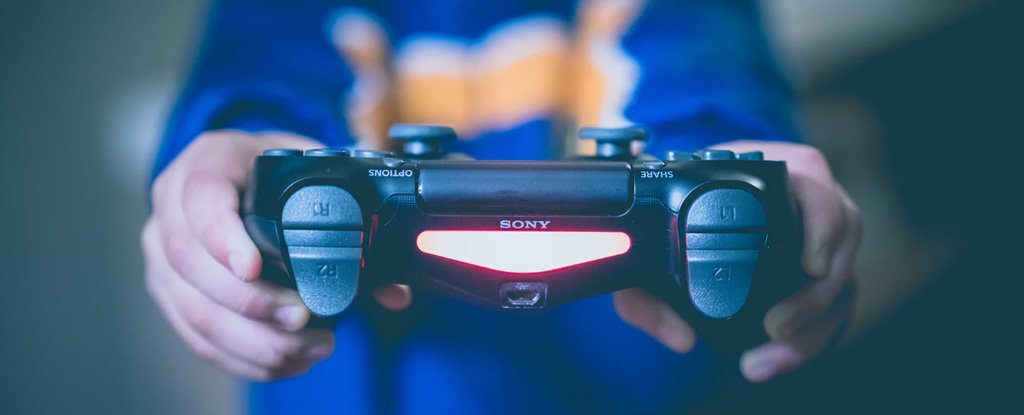
Research has long debunked another common explanation among politicians: that violent video games are driving the mass shooting crisis. The idea was floated again by House Minority Leader Kevin McCarthy (R-Calif.) and Trump, who talked of restricting "gruesome and grisly video games."
There is, however, no statistical link between playing violent video games and shooting people, said Jonathan Metzl, director of the Center for Medicine, Health and Society at Vanderbilt University.
A 2004 report conducted by the Secret Service and the Education Department found that 12 percent of perpetrators in more than three dozen school shootings showed an interest in violent video games. Despite a continuing lack of a link, lawmakers and public figures continue to blame the gaming industry.
"When politicians like President Trump perpetuate this narrative, to me, it is the height of irresponsibility, because it's perpetuating a falsehood," Metzl said.
The eagerness to blame mental health and video games means society is searching for answers in the wrong places, experts say.
At the height of the reflex to blame video games - following the Columbine High School shooting in 1999 - a Gallup poll found that 62 percent of adults nationwide believed entertainment was the major catalyst for the tragedy and that 83 percent supported restrictions on the sale of violent media to children. President Bill Clinton even called for an investigation on how the advertising industry sold violent entertainment.
Last year, a Post-ABC poll on mass shootings found that 57 percent of people believed shootings were a reflection of failures to identify and treat people with mental health problems. Meanwhile, 28 percent thought it reflected inadequate gun-control laws.
"The irony is clearly we do need more robust mental health system," said Arthur C. Evans Jr., a psychologist who heads the American Psychological Association. "But that's separate and apart from these shootings."
Almost 5 percent of the US population suffers from a serious mental illness in a health-care system that most clinicians say severely under-prioritizes mental health. That has often left those in crisis begging insurers and providers for help.
More than 60 percent of counties in America don't have a single psychiatrist. Only 43 percent of adults in the United States with a mental health condition received help in the past year.
People with serious mental disorders are 3.6 times as likely to exhibit violent behavior, according to the National Epidemiologic Survey on Alcohol and Related Conditions. But they are far more likely to be the victims of violence - at 23 times the risk, compared with the general population.
A study published in the journal Annals of Epidemiology found that "the large majority of people with mental disorders do not engage in violence against others, and that most violent behavior is due to factors other than mental illness."
"We like to think that anyone who kills others is somehow mentally ill," said Phillip Resnick, who served as a forensic psychiatrist in cases including Oklahoma City bomber Timothy McVeigh and Unabomber Ted Kaczynski. In an interview last year, Resnick said, "you have to remember, people kill for all sorts of reasons. They kill for profit or love or greed."
Mental health advocates say comments such as Trump's labeling shooters as "mentally ill monsters" can exacerbate false stereotypes about the mentally ill.
"When you blame people with mental illness for things like mass shootings, it's not just untrue," said Angela Kimball, head of the National Alliance on Mental Illness.
"It keeps people from seeking help even when they need it. It spreads unjustified fears about the mentally ill and worsens the stigma around it."
The 2018 FBI study found that shooters typically experienced several stressors in the year before they attack: financial pressures, fights with classmates or co-workers, and substance abuse.
And on average, shooters displayed four to five concerning behaviors that those around them could notice - the most frequent being behavior related to mental health, interpersonal conflicts or some sign of violent intent.
Researchers point out that other countries have similar rates of mental illness but a small fraction of America's gun deaths. Similarly, video games are widespread in Europe and Asia, yet their rates of gun deaths are much lower than that in the United States.
Epidemiologists say that what sets the United States apart from the rest of the world is guns.
America has nearly 400 million civilian-owned firearms, or 120.5 guns per 100 residents - meaning that the country has more guns than it has people. The second-closest country, Yemen, had 52.8 guns per 100 residents, according to the Small Arms Survey.
"Mental illness is not the real issue, because mental illness is something that happens across the globe. Mass shootings? Not so much," Kimball said. "The sad truth is that in America, it's easy to get a gun. It's very difficult to get mental health care."
Timothy Bella contributed to this report.
2019 © The Washington Post
Comment